At first glance, it seems absurd to convince thousands to put down $5,000 deposits for cars that will not exist for two years.
Yet that’s exactly what George Blankenship achieved at Tesla after already revolutionizing retail at Apple.
His secret? He understood that transformative products don’t need to be sold — they need to be told.
The Apple Foundation
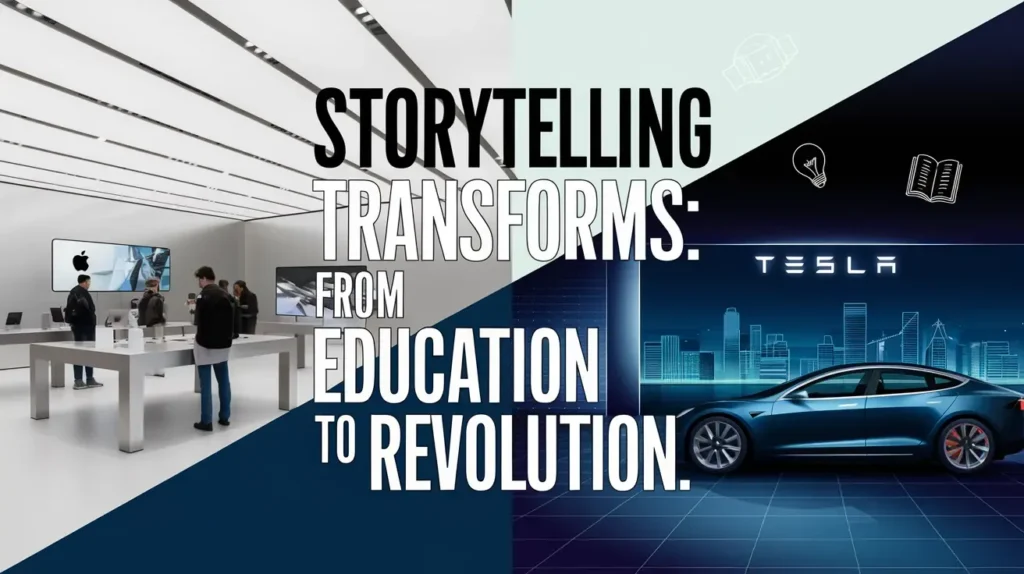
Blankenship first proved his retail philosophy at Apple, where he architected their revolutionary retail strategy.
Traditional wisdom said computer stores must be stuffed with inventory and staffed by commission-hungry salespeople.
Blankenship envisioned something different: spaces where people could experience technology as part of their story, not just as consumers.
The Tesla Gambit
The challenge was even more daunting when Elon Musk brought Blankenship to Tesla.
At least Apple had products you could hold in your hand. Tesla was asking for significant deposits on cars that existed only in blueprints.
Most automotive executives would have balked at this approach. The conventional playbook calls for flashy showrooms, aggressive sales tactics, and immediate gratification.
Blankenship threw out that playbook entirely.
The Power of Story
Instead of selling cars, Blankenship focused on telling Tesla’s story: the vision of sustainable transportation, the thrill of electric performance, and the pride of being part of a revolution.
He created spaces where people could connect with this narrative, understanding that when people buy into a story, they’ll buy into the future.
The result? Tesla accumulated thousands of $5,000 deposits for its first production run—two years before the first car was manufactured. These weren’t just pre-orders; they were declarations of belief in a story about the future of transportation.
The Bigger Picture
Blankenship’s approach reveals a profound truth about modern commerce: in an age of infinite choice, people buy into narratives, not just buy products.
Whether it’s a $699 iPhone or a $40,000 Tesla, the decision to purchase is emotional before it’s rational.
This strategy worked for premium products precisely because it didn’t treat them as commodities. Instead of focusing on features or specifications, Blankenship created a narrative that made people ask, “How can I be part of this story?”
The Lesson for Modern Business
The implications extend far beyond retail. In today’s marketplace, every business needs to understand that it is not just selling products or services—it is selling stories.
The companies that thrive will be those that can craft and communicate narratives that resonate deeply with their audience’s aspirations and values.
Blankenship’s genius wasn’t in creating better sales techniques but in understanding that the best sales strategy is to make selling unnecessary. When your story is compelling enough, people will write themselves into it — even if it means putting down $5,000 to reserve a spot in a future that doesn’t exist yet.
As we move into an era where traditional retail continues to evolve and transform, Blankenship’s lesson becomes even more relevant: Don’t sell the product. Tell the story. The sales will follow.
What stories are you telling in your business? How are you making your customers the heroes of those narratives?
The answers to these questions are worth their weight in pre-orders.
Want to master the art of influence like George Blankenship? It’s not about flashy sales tactics — it’s about building genuine trust and authority.
As a CEO for over 4 decades, I have helped over 5,760 company directors across the UK, Europe, and the U.S. achieve industry influence.
I wrote a FREE 5-day email series, “Mastering Industry Influence,” which reveals the five critical mistakes CEOs make that can sabotage their success (and how to avoid them!).
You’ll learn how to:
● Craft a unified message that resonates across all channels.
● Foster open communication that builds trust and unlocks your team’s potential.
● Establish a safe space for dialogue so team members feel valued and heard.
● Become a thought leader who shapes industry conversations.
● Adapt to market shifts and stay ahead of the curve.
Are you ready to transform your leadership communication and achieve industry influence?
Click here to sign up for this [free email series] — it’s packed with actionable insights you can use immediately.
P.S. Don’t forget to check your spam folder — sometimes those pesky “email algorithms” think I’m a robot! 🤷🏻